Buenos Aires · Argentina
I build things.
As a kid I took apart every broken appliance in the house or the neighbours. Just to see if I could get it working again. That turned into blacksmithing, then into websites and apps. Same itch, better tools.
Personally I just try projects out when I need them, or think people need them. Fortunately many are still used today by thousands of people daily.
At Finvisor, I'm building a team in Buenos Aires. Making Accounting and backoffice fun again. Powering US startups with AI tools that will eventually do most of the boring backoffice work
Building now
Live & maintained
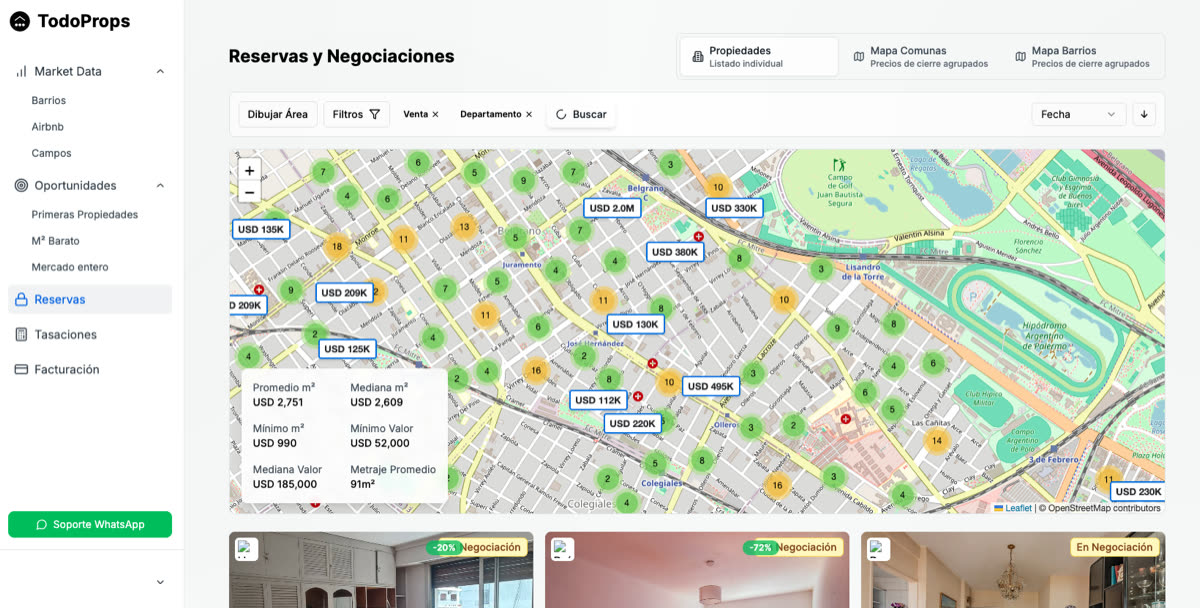
The first centralized data layer for the Argentine real-estate market. Real-time new-listing alerts, price-change tracking, time-on-market, zone comparatives, valuations and ROI — with map/geo analysis and cadastral parcel sync. Started as a browser overlay for Zonaprop; grew into a full platform.
Next.jsSupabaseMapLibre / TurfApify
My playground for SEO and web — a large set of free, client-side utilities (converters, calculators, PDF and image tools, encoders, generators). I prefer building the tool to handing my files to a random site, so most of it runs entirely in the browser.
Next.jsTypeScriptProgrammatic SEO
Real-time USD/BOB tracker for Bolivia, with an interactive map of 1,000+ banks, ATMs and casas de cambio, and a set of economic indicators. Data stitched from OpenStreetMap and free APIs, kept fresh by background jobs.
Next.jsSupabaseLeafletTrigger.dev
Two tools in one extension. Export any live DOM element into Figma as real, editable layers with auto-layout — not a screenshot. And a voice bug reporter: option-double-click an element, describe the problem, and it files a fully documented GitHub issue (selector, sanitized HTML, console errors, screenshot) with optional hand-off to a coding agent.
TypeScriptFigma Plugin APIWhisper
Save and restore your tabs by copying and pasting URLs, in text, HTML, JSON or custom templates. A careful rewrite of the classic CopyAllURLs, with a storage layer that self-checks and repairs.
JavaScriptChrome MV3
Detects every inline and file-based SVG on a page, previews them, and lets you download one with a custom name or grab all of them as a ZIP — in the original vector format.
JavaScriptBunVitest
Earlier products
Shipped, sold or shelved
LecturaLibre discontinued
9k downloads
Gave students access to Argentine school books — a search engine over 600,000+ scraped titles you could filter, download and store. Flutter app with a local SQLite index; the web layer moved HTML → React → Next.js to index thousands of books. Pulled from the Play Store over its terms.
FlutterPython scrapersNext.js
Restobar shut down
200k+ dishes
Made eating out easier for people with dietary restrictions. Over 1,000 restaurants and 200,000 dishes you could filter by name, location and restriction — plus free digital coverage for restaurants (site, QR menu, link tree). Menus auto-loaded via scraping. MERN stack on a DigitalOcean droplet.
ReactNodeMongoDBNginx / S3
Turned unavailable audiobooks into videos that highlight the text as they read — generated in near real time with early Microsoft AI, Python for the image/format pipeline and JS for the YouTube metadata. Grew to 7k subscribers and peaked around 5k views a day.
PythonNodeMicrosoft AI
A Telegram bot that filtered crypto noise into daily signal — airdrops, staking, sentiment. Really an excuse to learn firewalls, networking, websockets and cloud. Selenium scrapers over CoinMarketCap, CoinGecko, Binance and others, into MongoDB.
PythonSeleniumMongoDB
A smart speaker you tell what you've used up; at the end of the week it emails your shopping list, sorted by the cheapest nearby supermarkets. Built on the Google Assistant SDK and a couple of Google Sheets. The MVP worked — the supermarkets' missing APIs didn't.
NodeApps Script
Deppty
Next.js MVP
A property-management platform taken to production and paused — single and multi-property calendars synced to Google Calendar, bookings and availability behind auth.
Next.jsSupabaseTypeScript
Work
Roles & consulting
The only tech person at a US accounting firm, so the whole stack is mine: I built 100% of the internal app — time and work tracking, client records, billing, internal costs, profitability, close checklists and automation — plus the client portal, the databases and servers, and integrations across Xero, QuickBooks, Plaid and every client system we touch. Day to day it's Next.js and Supabase with row-level security, background jobs, and a lot of small tooling that quietly makes the rest of the team faster.
Consulting is insane — I was managing 8+ clients by week two, learning a lot fast. Started in Zapier and Make, became a Bubble.io expert (which is where the 33 plugins came from), then went deep on Node and React to push low-code past where it usually stops: custom plugins, real APIs, and migrations off the no-code tools once a client outgrew them.
LatAm's largest vocational event. I joined at the start of the pandemic to digitize it end to end — Python bots to collect school emails, personalized JS follow-ups, a redesigned site, and the whole thing broadcast virtually over WordPress and YouTube when nobody could gather in person. That year it went from a 500-person event to 6,000. Year two was automation and B2B cold email to bring the schools back at scale.
Migrated a telecom's US site off Sitecore onto Webflow with every bit of traffic and content mapped precisely — redirects, URL structure and SEO equity preserved through the cutover. A big company with a lot of stakeholders, which was most of the work. It landed well, and we moved on to the sub-sites.
Barcelona tech-recruiting agency. I sat with every employee, mapped how the business actually ran, and digitized as much of it as I could — candidate pipeline, outreach and reporting — automating the parts that didn't need a human and leaving the parts that did.
Open Music Exchange · Value Buddy · Fancy Apartments · Tinkso · Sourcetool
Product & consulting
Shorter engagements: the search algorithm and UX for a web3 music platform; a company-valuation platform built from a few questions; digital-process work for a Houston real-estate locator; MongoDB/Firebase → SQL migrations at a Bubble software factory; and a sourcing extension that greys out profiles a recruiter has already seen.